


T+1 Settlement 2026: Global Transition, Impacts, and Strategic Insights
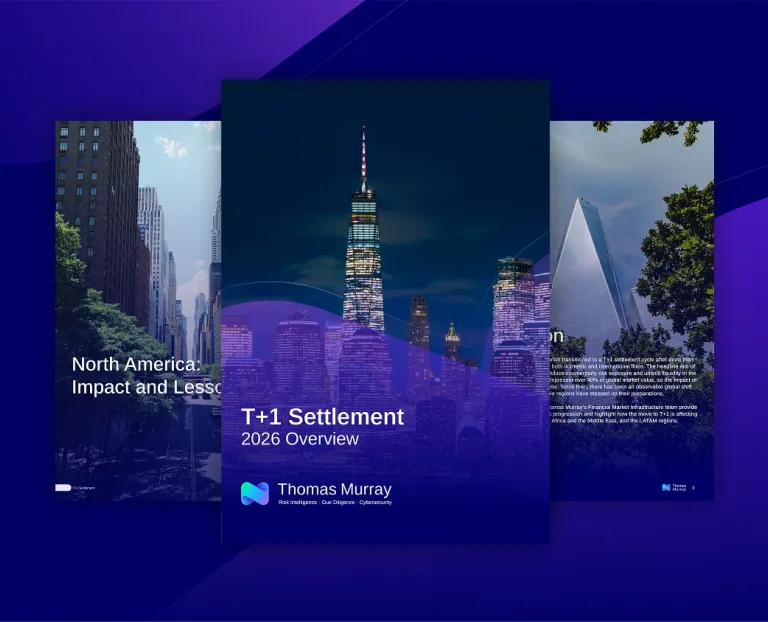
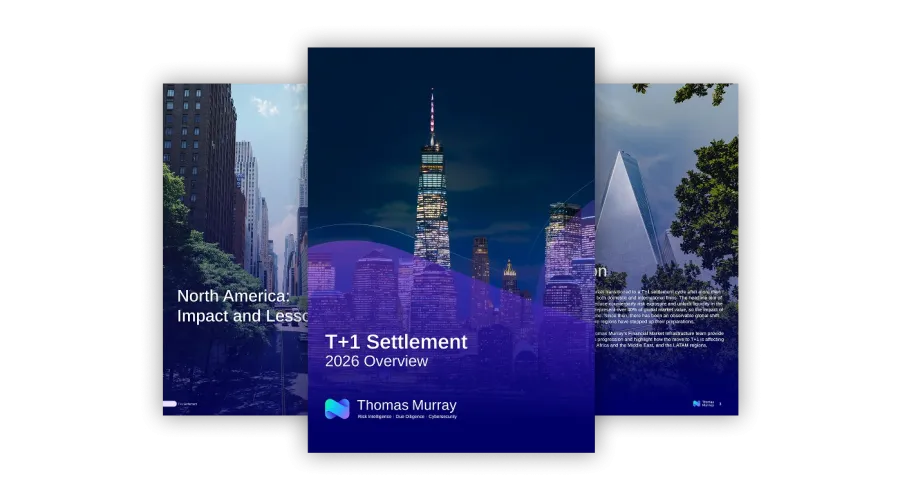
On 28 May 2024, the US equities market transitioned to a T+1 settlement cycle after more than a year of intense preparation among both domestic and international firms. The headline aim of the move to T+1 settlement was to reduce counterparty risk exposure and unlock liquidity in the US settlement process. US equities represent over 40% of global market value, so the impact of this shift has been felt across the globe. Since then, there has been an observable global shift towards faster settlement and multiple regions have stepped up their preparations.
In this updated paper, analysts in Thomas Murray’s Financial Market Infrastructure team provide regional updates on settlement cycle progression and highlight how the move to T+1 is affecting North America, Europe, Asia Pacific, Africa and the Middle East, and the LATAM regions.
The eBook covers:
- North America: Impact and Lessons Learnt
- The European Union: A Countdown to T+1
- India and Pakistan
- APAC: Continued Patience or Rising Pressure?
- Building Towards Shorter Settlement Cycles in Latin America, Africa and the Middle East
Fill out the form to download your copy
Insights

T+1 settlement: 2026 Overview
Expert analysis from Thomas Murray's Financial Market Infrastructure team of how the move to T+1 is affecting the world's markets.

NYSE proposes around-the-clock trading
The New York Stock Exchange exploring the possibility of trading on a 24/7 basis has caused both excitement and concern among market participants.

Cash correspondent banking and monitoring: A primer
Correspondent banking, whether traditional or digital, plays a vital role in the international financial system.

Correspondent monitoring: A safeguard against the worst-case scenario
Correspondent banking plays a vital role in the global financial system, though it does carry significant risks.